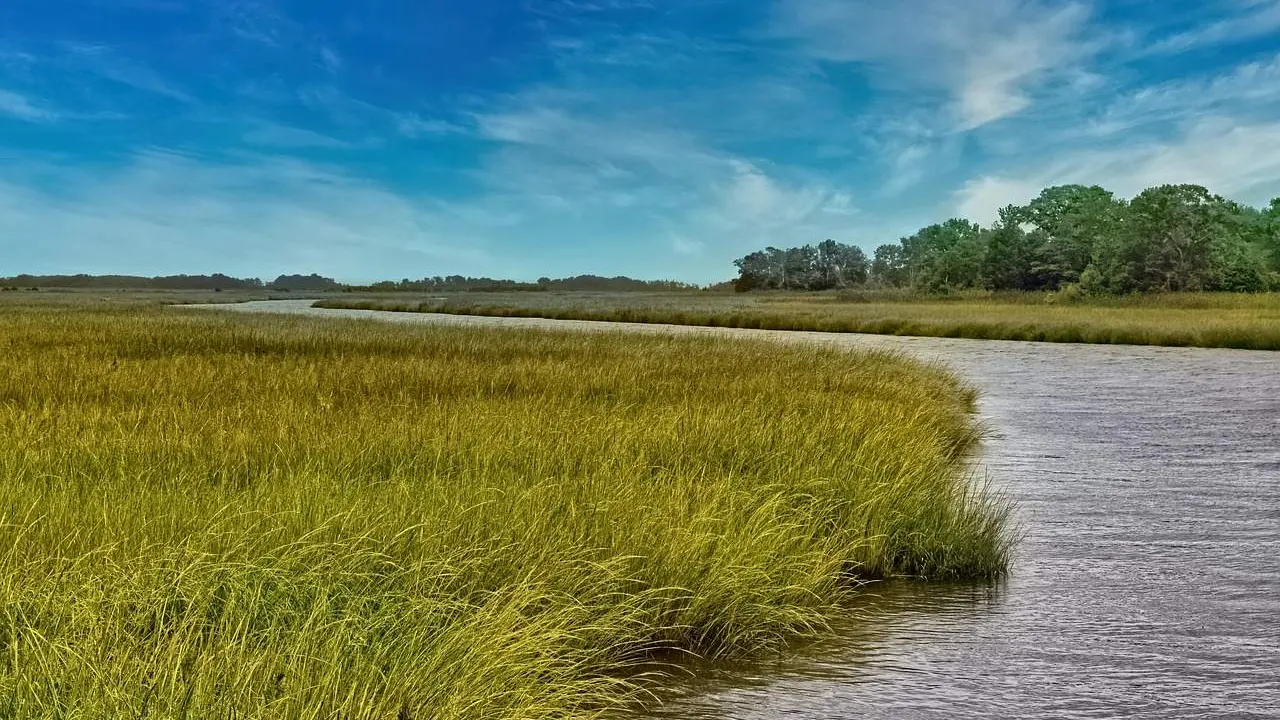
Is that muddy tidal marsh near you doing anything useful? Yes: salt marsh functions include storm protection, water filtration, nursery habitat and long-term carbon storage, all without a bill.
Salt marshes are one of the habitats covered under the wider topic of coastal ecosystem services.
| Item | Value |
|---|---|
| Global saltmarsh coverage lost | 25%-50% of coverage |
| Carbon sequestration rate versus other terrestrial wetlands | 10 times higher |
| Depth of carbon-rich marsh deposits | Up to six meters |
| Carbon dioxide sequestered by the Delaware Estuary | Over 306,000 Mg per year |
| Damages avoided by that sequestration | About $18.32 million per year |
The figures come from a Delaware wetland program blog post from December 2020 and a global survey paper accepted in 2020. They can change as new studies appear, so check the source before you rely on them.
What is a salt marsh?
A salt marsh is a type of wetland that is regularly flooded and drained by the tides, as WWF Canada described in July 2024. Its rushes, grasses and sedges have adapted to large swings in water, salt content, temperature and oxygen levels.
The Delaware wetland program defines an ecosystem service as a natural process that contributes directly or indirectly to the well-being of people. Salt marshes supply several of them at once, and Statistics Canada’s November 2022 paper lists the main ones in its salt marsh ecosystem accounting framework:
- Carbon sequestration
- Protection against coastal storms and flooding
- Maintenance of water quality and quantity
- Habitat provision
- Support of recreational activities
The sections below take these functions one at a time, starting with the ones you can see from the shoreline.
Coastal protection and water quality
Dense marsh roots help stabilise sediment and reduce wave energy. According to WWF Canada’s 2024 story, this prevents shoreline erosion and protects coastal communities from storm surges and flooding.
Statistics Canada makes the same link in its 2022 paper: healthy salt marshes that are not shrinking can protect homes and infrastructure from coastal flooding. The condition of the marsh matters, because a shrinking marsh offers less protection.

Marshes also work as a natural filter. They trap sediments and absorb excess nutrients, which improves water quality in estuaries, bays and nearshore waters.
That matters because runoff from roads, roofs and farmland carries oil, detergents, pesticides, nutrients and silt toward the coast. The Wetlands Institute makes a similar point: marshes improve water quality by filtering stormwater runoff.
Nursery habitat and biodiversity
Marshes feed and shelter young animals. The Wetlands Institute says they provide food, refuge and nursery habitat for a wide variety of wildlife, including diamondback terrapins, coastal birds and a great many fisheries species, in its description of marsh health.
Some species depend on marshes completely. The Maritime ringlet, a small butterfly, has a global range restricted to the coastal salt marshes surrounding the Baie des Chaleurs, between Quebec and New Brunswick, according to WWF Canada.
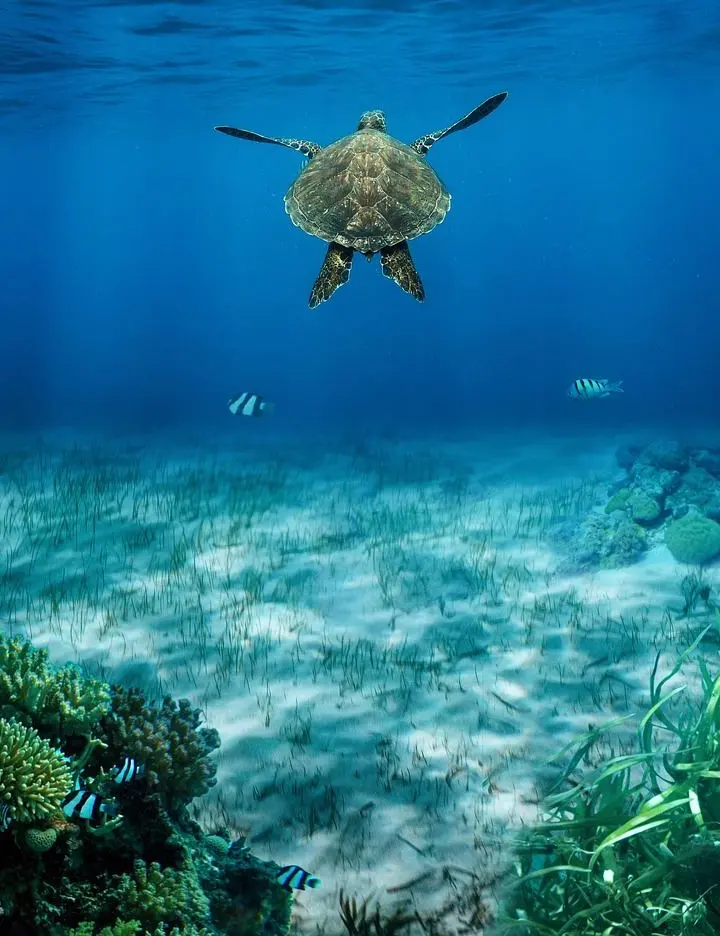
Seagrass is a neighbouring habitat, not a marsh. The same WWF Canada story reports that over 80 per cent of commercial fish and shellfish species in the Pacific Northwest are estimated to depend on eelgrass habitat at some point in their lifecycle. For how young fish use tidal waters more broadly, see the guide to estuary nursery habitat fish.
Marshes also support people directly. WWF Canada notes that glasswort is harvested from salt marshes all over the world, and that the salt marshes of Bras d’Or Lake in Nova Scotia are critical habitat for the American eel.
How salt marshes store carbon
Marshes are known for carbon sequestration, which means removing carbon from the atmosphere and locking it away. The Delaware wetland program says salt marshes can sequester carbon at rates 10 times higher than other terrestrial wetland systems. WWF Canada adds that Canadian coastal wetlands sequester more carbon per square metre than terrestrial forests.
The Delaware post describes the cycle in steps:
- Marsh plants absorb carbon dioxide while they grow, and the carbon is stored in the plant matter.
- When the plants die, part of that matter is decomposed by microbes and a portion remains on the marsh surface.
- Twice a day, tidal waters carry suspended sediments onto the marsh, and the living plants slow the water so the sediment settles.
- That sediment buries the plant material and the carbon inside it, and it raises the marsh surface.
- Slow, natural sea level rise lets the marsh gain elevation at a pace that can keep up.
Over thousands of years, this cycle has formed carbon-rich deposits reaching six meters in depth. Rates differ by region, because the length of the plant growing season and the amount of sediment deposited both vary.
WWF Canada notes that carbon stored this way can remain in the sediment for thousands of years, which is why it has its own label: blue carbon.
What salt marsh functions are worth
Putting a price on a marsh helps explain why it matters. The social cost of carbon is the sum of all the costs of one additional ton of carbon dioxide being emitted into the atmosphere, and its exact value shifts with assumptions about future climate impacts.
The Delaware post applies it to one estuary. It reports that the Delaware Estuary sequesters over 306,000 Mg of carbon dioxide annually, equivalent to the emissions of 66,109 passenger cars in one year.
Using a social cost of carbon of $59.83, the post estimates that this prevents about $18.32 million in damages every year. That is a valuation of a single service, so it understates the total value of the marsh.
Governments are also starting to count marshes in their official statistics. Statistics Canada’s 2022 paper says its Census of Environment will build ecosystem accounts that track extent, condition and services over time, and that salt marshes are an early focus. The first pilot accounts will have gaps, with some variables missing, incomplete or estimated by proxy.
Marshes are one habitat among several, and comparing them helps. The guide to coral reef ecosystem services sets out a different mix of benefits.
Why salt marshes are under pressure
A global survey paper accepted in 2020 reports that saltmarshes have lost 25%-50% of their coverage, mainly through human pressures and land-use change. The same paper says global data on their services and management are fragmented, patchy and often limited to local case studies.
The survey drew on 438 respondents, professional researchers and practitioners representing 40 countries. It found that geographical location was the most common factor shaping how people rank marsh services and how they view management.
Sea level rise is a particular risk. The Delaware post warns that marshes unable to gain elevation fast enough will drown and erode away, and that this would release stored carbon back into the environment.
The same post names several responses as essential to protecting marshes and their stored carbon:
- Living shorelines
- Beneficial reuse of dredge material
- Other restoration projects
The Wetlands Institute reports using beneficial reuse of dredged sediments to protect the marsh platform from conversion or drowning. It also monitors terrapins and coastal birds, whose population size, behaviour and breeding success can signal changes in the marsh itself.
Frequently asked questions
Are salt marshes and seagrass meadows the same thing?
Show answer
No. WWF Canada describes salt marshes as wetlands flooded and drained by the tides, while seagrasses are aquatic flowering plants that form meadows in shallow inlets, bays and estuaries. Both absorb carbon and improve water quality.
Why do salt marshes store so much carbon?
Show answer
Plants capture carbon, tides deposit sediment that buries dead plant matter, and slow sea level rise lets the surface build upward. The Delaware wetland program says this cycle has formed deposits up to six meters deep.
How much salt marsh has been lost?
Show answer
A global survey paper accepted in 2020 says saltmarshes lost 25%-50% of their coverage. It attributes the loss mainly to human pressures and land-use change.
Can the value of a marsh be measured in money?
Show answer
Partly. The Delaware post uses the social cost of carbon to value one service, carbon sequestration, in one estuary. The exact value varies with assumptions about future climate impacts, so treat such figures as estimates.