Wondering why mangroves and seagrass keep appearing in climate talks? Blue carbon explained: it is the carbon stored in coastal and marine ecosystems, and wet coastal soils hold it for centuries unless disturbed.
Blue carbon is one thread in the wider topic of coastal ecosystem services, which looks at what healthy shorelines do for people.
| Item | Value |
|---|---|
| Estimated carbon accumulation in sediment | 131 Tg carbon per year |
| Estimated loss of natural habitat distribution | about 50% |
| Storage time in plant biomass | years to decades |
| Storage time in marine sediments | can last millennia |
These figures come from the UF/IFAS Extension primer (February 2025) and the German Environment Agency factsheet (May 2025). They are estimates and can change, so check the source before you rely on them.
What is blue carbon?
In its broadest sense, blue carbon is carbon dioxide absorbed from the atmosphere and stored in the ocean, as NOAA’s Climate.gov explainer (published September 29, 2022) puts it. The vast majority of that carbon is dissolved directly in seawater, with much smaller amounts in sediments, coastal vegetation, soils and marine life.
Most policy discussion narrows to coastal blue carbon: carbon held in the vegetation and soils of mangroves, salt marshes and seagrass meadows. IUCN’s issues brief (November 2017) describes blue carbon as carbon stored in coastal and marine ecosystems.
The term has no single agreed meaning. As of the German Environment Agency’s May 2025 factsheet, no scientific or political agreement on a definition existed.
How coastal ecosystems store carbon
Three habitats do most of the work, and each looks quite different:
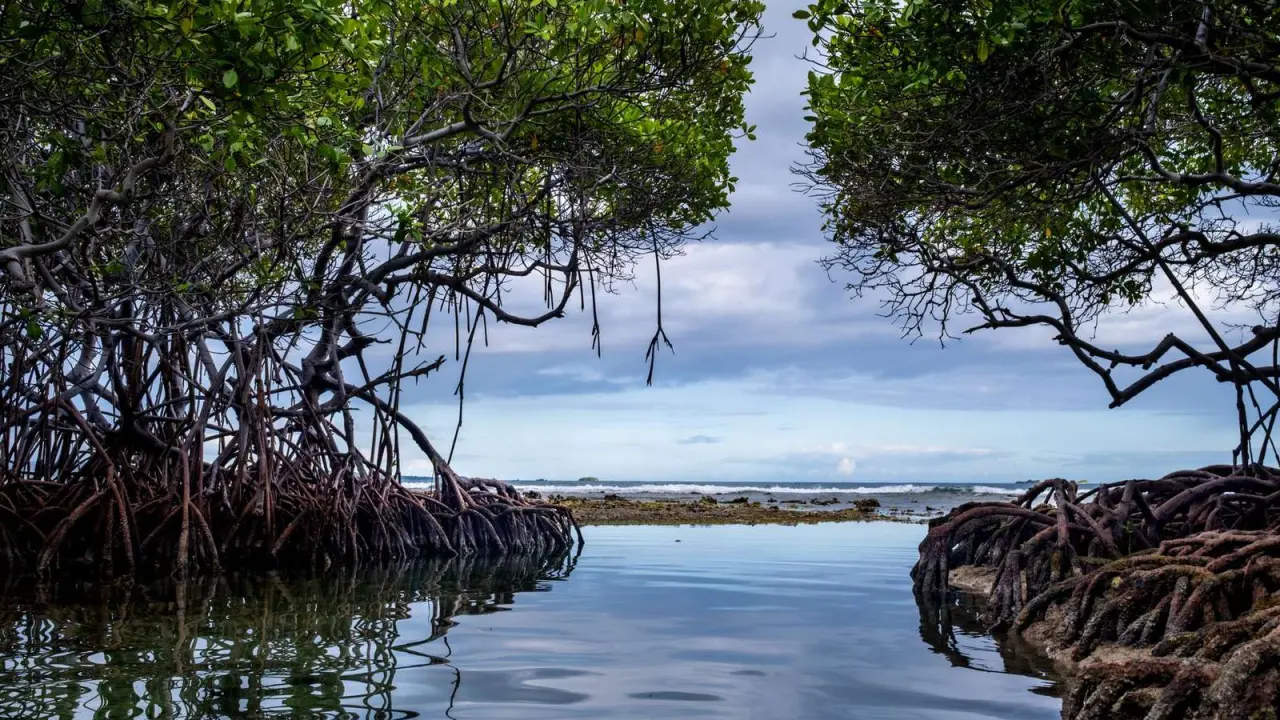
- Mangroves are trees, shrubs or palms that mostly grow in coastal swamps flooded by salt water at high tide.
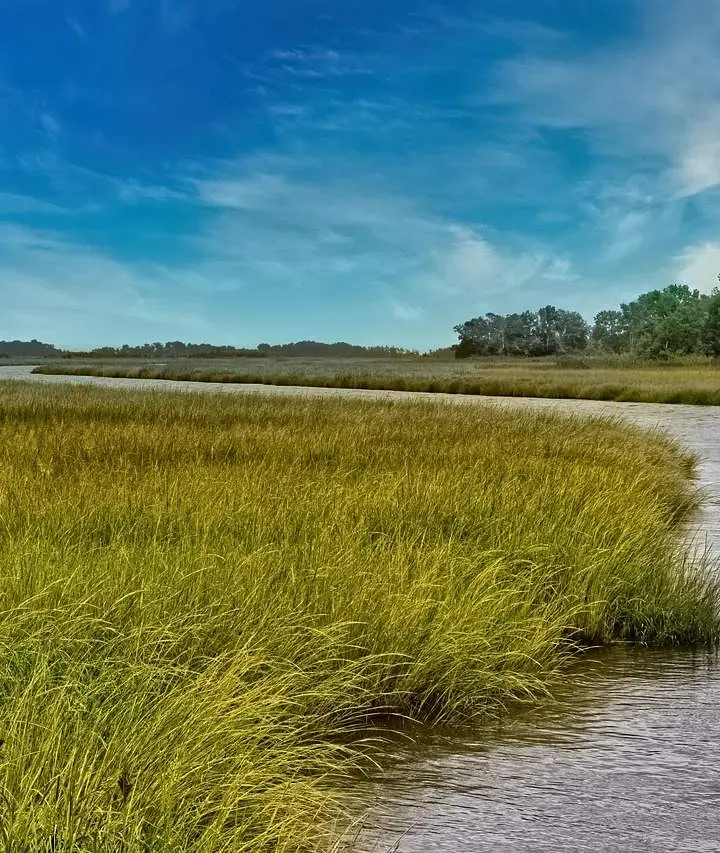
- Salt marshes are dense stands of salt-tolerant grasses, herbs or shrubs between land and open salt water.
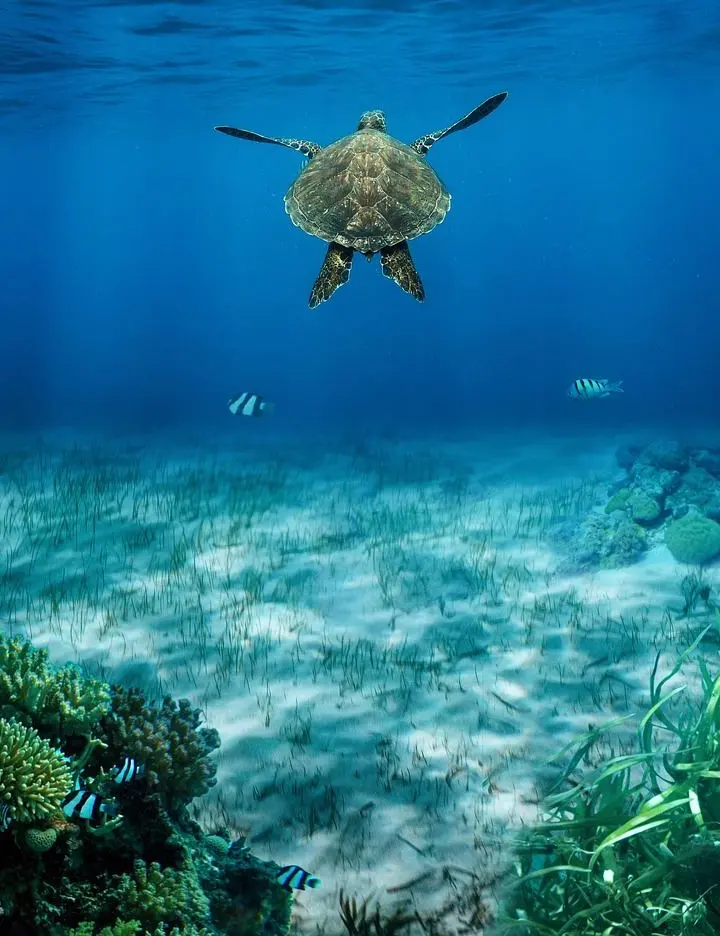
- Seagrass meadows are flowering plants that grow in salty marine environments.
All of them absorb carbon dioxide through photosynthesis. According to NOAA Climate.gov, some of that carbon returns to the atmosphere as methane and carbon dioxide, some is buried in the soil, and some is carried farther away and buried in ocean sediments.
The key is waterlogging. On land, oxygen-using microbes break down dead matter quickly, but in flooded soils oxygen levels are low and decomposition happens more slowly.
The result is a lot of carbon in a small area. NOAA says these deep, water-logged soils can bury many times more carbon per acre than even a tropical rainforest, and IUCN’s brief likewise says they store more carbon per unit area than terrestrial forests.

When coastal soils turn from sink to source
The same wet soils that lock carbon away make these habitats a double-edged store. Undisturbed, NOAA notes, they can hold atmospheric carbon for centuries or even millennia, but degraded or drained they can quickly turn into a carbon source.
Plants stop growing and capturing carbon, and exposure to oxygen can lead rapidly to microbial decomposition and the release of carbon dioxide. IUCN’s brief makes the same point: when these ecosystems are degraded, the carbon stored in the soil is released.
Habitat loss is already large. The German Environment Agency’s factsheet (May 2025) says the natural distribution of mangroves, tidal marshes and seagrass meadows has been reduced by an estimated 50% through human interventions.
Storage lasts for different lengths of time. In the same factsheet, carbon in plant biomass lasts for years to decades, while carbon in marine sediments can remain stored for millennia. The UF/IFAS primer (February 2025) cites an estimate that sediment blue carbon accumulates at 131 Tg carbon annually.
How blue carbon fits into climate policy
IUCN’s brief (November 2017) places coastal ecosystems alongside tropical forests and peatlands as examples of nature-based climate mitigation. It says they offer countries opportunities to meet emissions reduction targets and Nationally Determined Contributions under the Paris Agreement.
On accounting, the same brief says mangroves, salt marshes and seagrasses can be included in national inventories under the IPCC 2013 Supplement to the 2006 Guidelines. It adds that technical elements such as soil carbon still need to be fully integrated.
NOAA adds that protected or restored habitats can become a tool for offsetting emissions, especially for island nations and developing countries whose own emissions are relatively low. The German Environment Agency notes that the European Climate Law requires EU member states to reach net zero by 2050, and that some unavoidable emissions will remain.
Context matters here. The German Environment Agency factsheet says ocean and terrestrial carbon sinks together absorbed about 50% of annual anthropogenic emissions from 2012 to 2021. Blue carbon habitats are one part of that picture, not a substitute for cutting emissions.
Benefits beyond carbon
NOAA lists added benefits for wildlife, water quality, storm surge protection and local economies, while IUCN points to coastal protection and food security. Readers interested in the wildlife side can follow the sibling guide on estuary nursery habitat fish. The storm side is covered in the guide to natural coastal protection from storms.
Kelp, coral reefs and the edges of the definition
Kelp is often left out of blue carbon discussions because its long-term carbon fate is hard to track. NOAA notes it grows at up to an average of 11 inches (28 centimeters) per day, but usually in rocky areas where carbon-rich soil builds up little, and most of the carbon it captures is exported as pieces drift away.
As of NOAA’s September 2022 explainer, scientists had not yet included kelp forests and other macroalgae in plans and policies for reducing atmospheric carbon dioxide. The German Environment Agency adds that macroalgae contribute about 50% of the carbon stored in seagrass sediments, so their long-term storage depends on other ecosystems.
Coral reefs are treated differently again. As of the May 2025 factsheet, reefs were considered to have net carbon dioxide emissions because of calcification, so they were not counted as blue carbon measures. The same text stresses that protecting reefs and macroalgae still matters for biodiversity and coastal protection.
A further question concerns the open ocean. As of IUCN’s November 2017 brief, using the UN climate convention to encourage better management of high-seas ecosystems was an area of debate.
Limits and open questions
Blue carbon is not a simple ledger. The UF/IFAS primer (February 2025) says the complexity and logistical issues in measuring blue carbon limit how far these ecosystems can be managed as nature-based climate tools.
The German Environment Agency’s factsheet argues that blue carbon measures need continuous monitoring to demonstrate three things:
- significant carbon uptake;
- carbon storage in the habitat;
- the influence of human activities on carbon sequestration.
It also names a core challenge: tracking carbon flows from where carbon is fixed to where it ends up stored. Methane released from coastal soils, noted by NOAA, is another reason net figures need careful measurement.
Frequently asked questions
Is blue carbon the same as all carbon in the ocean?
Show answer
Not quite. NOAA’s broad definition covers carbon dioxide stored in the ocean, most of it dissolved in seawater, while coastal blue carbon refers to carbon in mangrove, salt marsh and seagrass vegetation and soils.
Why do coastal soils store so much carbon?
Show answer
They are flooded, so oxygen levels are low and decomposition is slower than on land. Dead plant matter is therefore buried rather than broken down quickly.
Can damaged coastal habitats release carbon?
Show answer
Yes. IUCN and NOAA both describe degraded or drained habitats losing their sink capacity and releasing stored carbon dioxide.
Is kelp counted as blue carbon?
Show answer
Usually not in policy. As of NOAA’s September 2022 explainer, kelp was left out of plans because the long-term fate of its carbon is uncertain, and the German Environment Agency’s May 2025 factsheet does not count macroalgae measures as blue carbon measures.