If you wonder who pays to keep mangroves, forests and rivers healthy, a payment for ecosystem services scheme is one answer. Users of a service, such as clean water, pay the people who protect it.
This guide is part of the wider topic of sustainable coastal development, and it explains how these payments are set up.
| Item | Value |
|---|---|
| People directly employed in fisheries, mostly in the global South | 43.5 million people |
| Decline in size of mangrove forests along many developing-country coasts | Up to 50 per cent over the past half century |
| Share of fish stocks considered overexploited or depleted | Around a third |
| Coral cover growth reported in a Kenyan no-take zone | 30 per cent |
| People supplied with water by the Ruvu River in Tanzania | Over four million people |
These figures come from the IIED policy brief of May 2012 and the FAO factsheet on payments for ecosystem services. Figures can change, so check the source before you rely on them.
What is payment for ecosystem services?
A payment for ecosystem services (PES) describes a situation where the user of an environmental service, such as water purification, pays the landowners who provide that service, according to the UNECE study on forests and PES. For this to work, there must be a clearly defined user and a clearly defined supplier.
PES is generally defined as a voluntary transaction for a well-defined service. A key feature is additionality, meaning the payment causes a benefit that would not have happened otherwise, as the Water Knowledge Hub explains.
The FAO factsheet notes that most schemes revolve around three groups of services:
- Water and soil-related services.
- Climate stabilization.
- Biodiversity conservation.
The idea gained ground in the 1990s, when the debate on ecosystem services turned towards giving them an exchange value and building them into economic models. That helped make the case for protecting and restoring ecosystems.
Who pays and who gets paid
The buyers and sellers of a scheme sit on opposite sides of an ecosystem. Producers manage the land and oceans, and consumers benefit from the services that result. The Water Knowledge Hub lists several possible funders:
- Governments and international agencies.
- Local communities.
- Water companies and hydro-power producers.
- Flood protection agencies.
- Private companies.
In some cases the cost can be passed on to final consumers, for example through a higher price for sustainably grown products. Payments often flow through intermediaries, and the FAO factsheet describes the payer as a public or private entity.
UNEP’s 2008 primer outlines a four-step approach, from assessing ecosystem services and institutional capacity to structuring and carrying out agreements. A well-known model is the Water Fund, where utilities, businesses and water users invest upstream in the source of their water, first established in Quito, Ecuador, in 2000.
Experience shows PES is most likely to succeed where these conditions are present:
- There is a clear demand for the service, which has financial value to one or more stakeholders.
- Provision of the service is threatened.
- Specific management actions offer feasible solutions.
- Effective brokers or intermediaries exist.
- Resource tenure is clear and contracts can be enforced.
- Outcomes can be independently monitored and evaluated.
A worked example: the Ruvu watershed in Tanzania
The Uluguru Mountains in eastern Tanzania block moisture coming from the Indian Ocean, and the rain feeds streams that form the Ruvu River. According to the FAO factsheet, the river supplies water to over four million people in Dar-es-Salaam and to major industries.
A 2007 hydrological assessment by CARE-WWF found lower water quality, a sharp rise in sediment in the river and large swings in annual flow. Downstream treatment was needed and water supply was often rationed.
A joint CARE-WWF programme promoted a PES scheme in which downstream buyers, a water supply and sewerage corporation and a beverage bottler, paid upstream farmers from various villages. Farmers were paid for practices that control runoff and soil erosion while improving crops. The measures fall into three types:
- Structural: bench terraces and fanya terraces.
- Vegetative: reforestation, agroforestry and grass strips.
- Agronomic: intercropping with fruit trees, mulching and fertilizing with animal manure.
Payments are allocated according to how many hectares of land are converted and the type of practice adopted. The scheme links water quality downstream to livelihoods upstream.
Why coastal and marine payments are harder
The IIED brief of May 2012 describes PES in coastal and marine environments as still embryonic, although it is relatively widely used on land. Fish are more mobile and harder to monitor, and property rights are often ill-defined or insecure.
The stakes are high. Coastal habitats provide carbon storage, flood protection and cultural value, and one way the carbon service is paid for is explained in the guide to blue carbon credits. For the wider picture of how coastal activity and income fit together, the blue economy meaning page gives the definitions.
The same brief gives three examples of how payments have been applied:
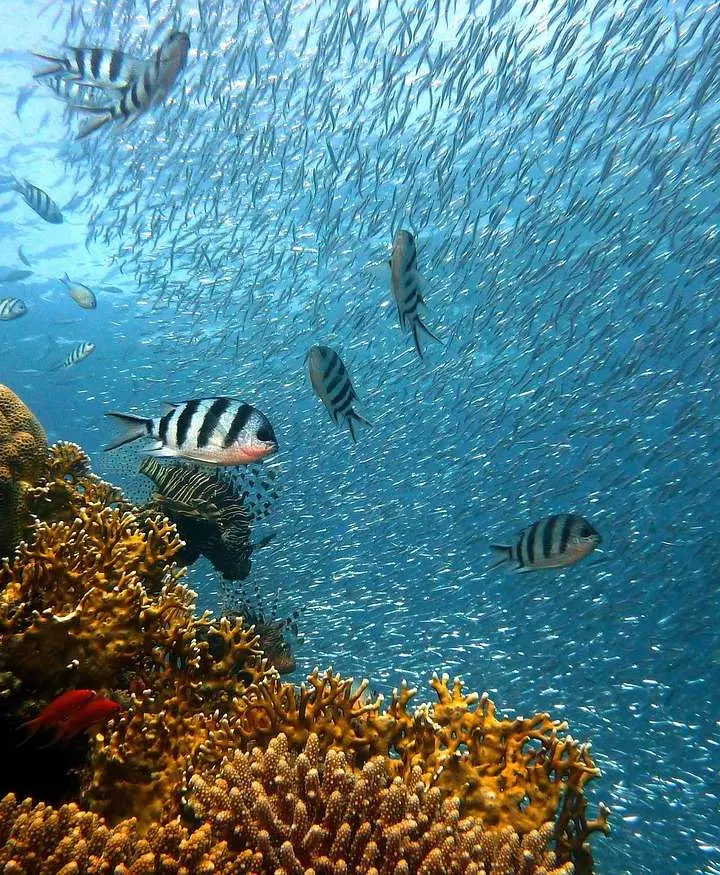
- Kenya: in 2005 a community association set up a no-take zone of two square kilometres. Local fishers were paid by an international NGO not to fish there, and coral cover was reported to grow by 30 per cent, seagrass species by 12 per cent, and fish stock to double. The scheme was struggling to secure financial sustainability because ecotourism had not raised adequate funds.
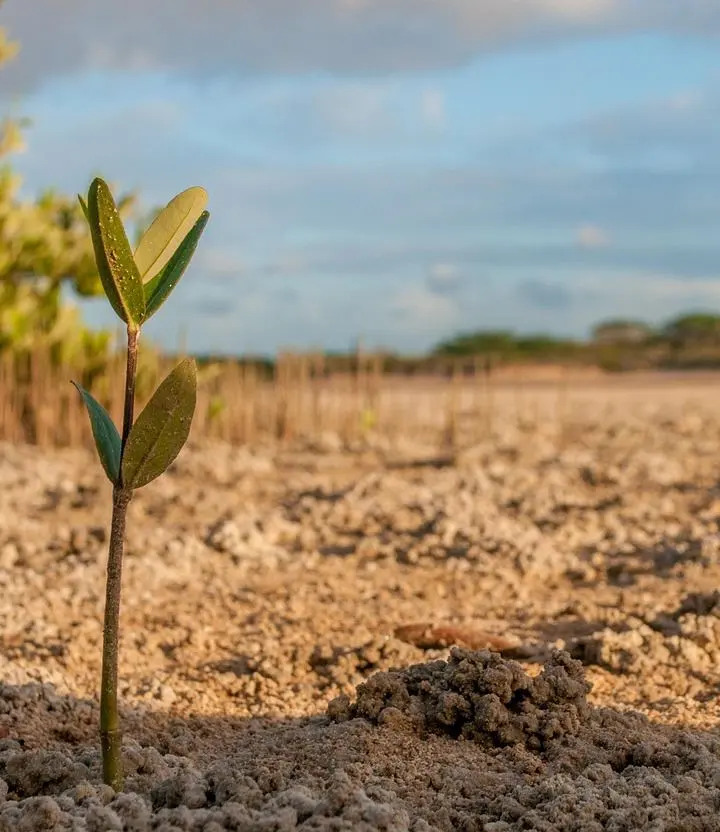
- Eritrea: the Manzanar project pays coastal communities small amounts to plant mangroves, a free meal and 20 Nakfa (US$1.33) per working day. The project claims up to 100 hectares have been afforested.
- Brazil: the defeso scheme reimburses fishers affected by closed seasons, although some researchers claim it is subject to free riding.
Challenges and limits
The Water Knowledge Hub groups common problems into environmental, economic and ethical considerations. The UNECE study also covers negatives that could occur without good policy in place.
- Measuring the service: it can be hard to quantify the existence and spatial distribution of services, and science on ecosystem response carries uncertainty.
- Leakage: practices in one ecosystem can lead to knock-on effects in another.
- Opportunity cost: a payment that is lower than the gain from less sustainable practices may fail, and paying for a service that would be provided anyway wastes money.
- Running costs: initial assessments and monitoring of contracts add expense.
- Ethics: ecosystems have intrinsic value beyond the economic.
For fishing, the IIED brief warns that payments will have to be high because the incentives to misbehave are so strong. It also says formally recognising communities’ customary rights is crucial to empowering local fishers to manage resources sustainably.
Frequently asked questions
Who pays in a PES scheme?
Show answer
It depends on the benefit. The Water Knowledge Hub lists governments, international agencies, local communities, water companies, hydro-power producers, flood protection agencies and private companies as possible funders.
What does additionality mean?
Show answer
It means the payment causes the benefit to occur where it would not have otherwise. Without it, a scheme may pay for something that would have been provided anyway.
Can payments help protect fisheries?
Show answer
As of the IIED brief of May 2012, evidence suggested such schemes can complement or replace regulatory approaches. The same brief says they need robust research, clear property rights, equitable benefit sharing and sustainable finance.
What is Remuneration of Positive Externalities?
Show answer
The FAO factsheet uses this term, shortened to RPE, for rethinking PES with investment in socio-economic co-benefits such as rural employment and community cohesion. It moves beyond environmental concerns to cover all sustainability dimensions.